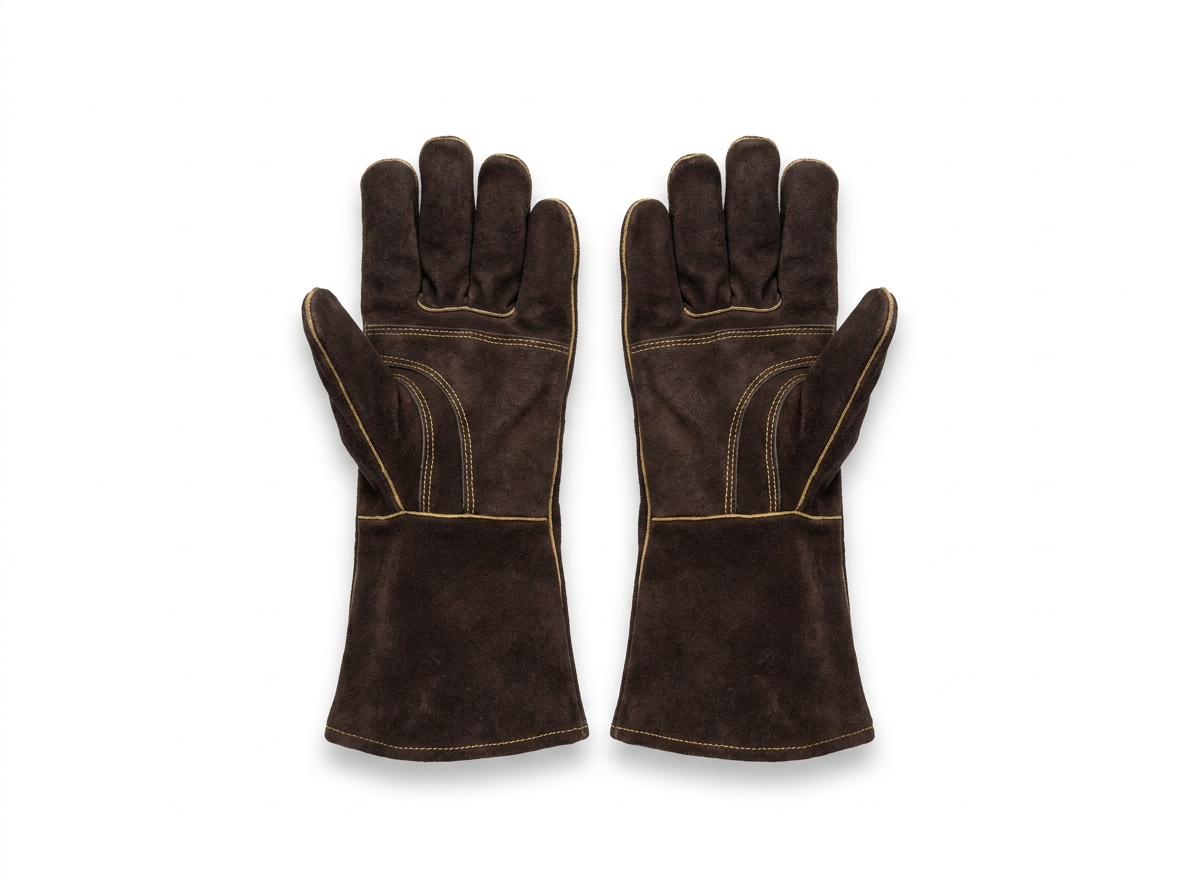
Overview
Heat-resistant gloves are designed for tasks involving high temperatures: welding, foundry work, oven operations, glass manufacturing, and cooking. They are rated under EN 407 for contact heat, convective heat, radiant heat, and small/large splashes of molten metal.
Materials
- ✓Leather (cowhide, goatskin)
- ✓Kevlar (aramid)
- ✓Nomex
- ✓Carbon fiber
- ✓Aluminized fabrics
Key Features
- ✓EN 407 six-digit rating
- ✓Contact heat ratings up to 500°C+
- ✓Some rated for welding (EN 12477)
✓ Pros
- +Certified for specific temperature ranges
- +Available for tasks from cooking (200°C) to foundry (1000°C+)
- +Some offer flame resistance
✗ Cons
- −Specialized gloves can be expensive
- −Heat protection often comes with reduced dexterity
- −Not all are waterproof or chemical resistant
Who Uses Heat-Resistant?
WeldersFoundry workersCommercial chefsBakersGlass blowers